Why Hotels Need to Switch from Paper to Digital Directories
Paper directories are static, expensive to update, and easy to ignore. A hotel qr code app directory gives guests instant, mobile-friendly access to everything they need while helping hotels sell more and operate more efficiently.
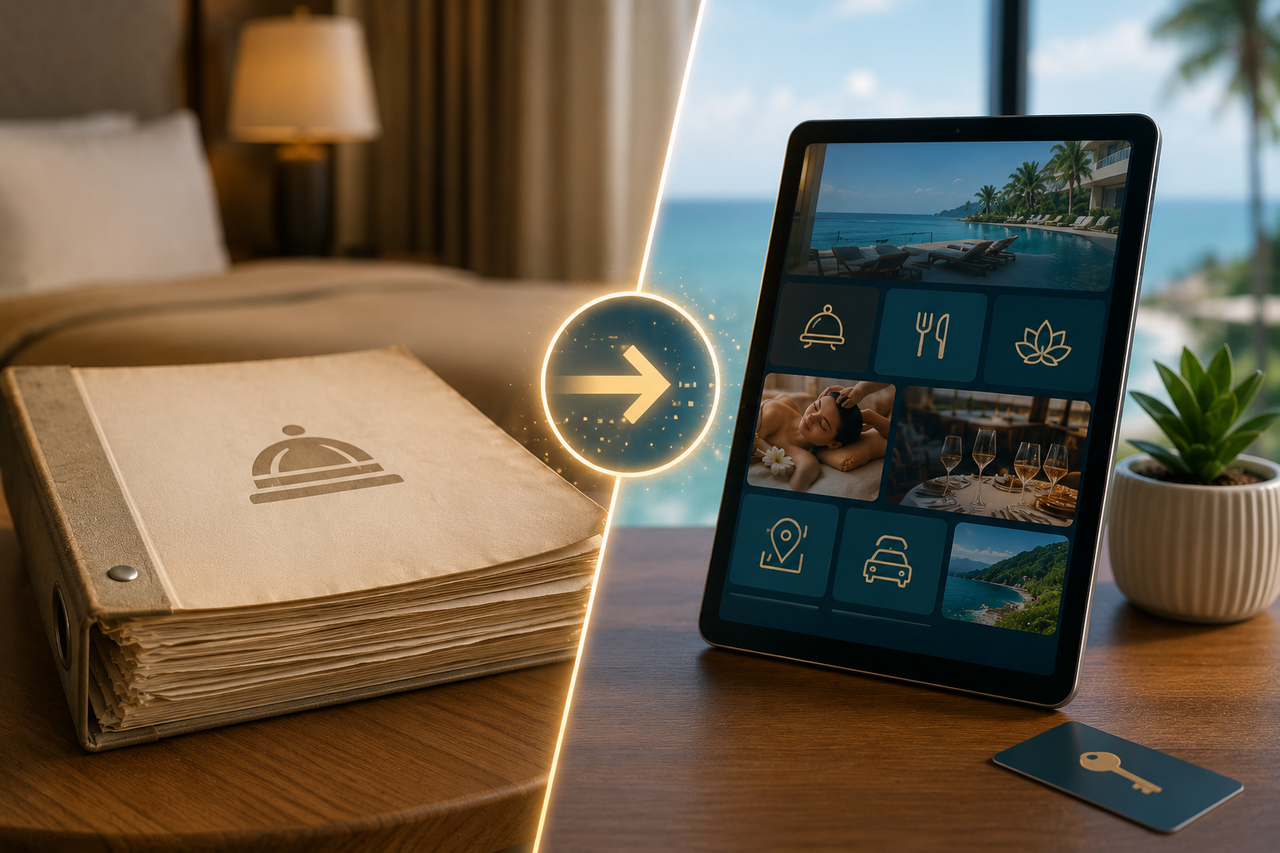
Hotels should switch from paper directories to a hotel qr code app directory because it is faster to update, easier for guests to use, and better at driving revenue from services, upsells, and bookings.
Why paper directories no longer fit modern hotels
Paper directories were built for a slower hospitality model. They can become outdated the moment a phone number changes, spa hours shift, or a menu price is revised. By contrast, QR-based digital directories can send guests directly to a guest app, website, booking page, or information hub without requiring them to type a URL or call the front desk first.
That matters because hotel guests increasingly expect self-service, mobile access, and immediate answers. A paper directory forces guests to search, flip pages, and often make a second request to staff. A digital directory reduces that friction by putting information into the guest’s hand instantly through a scan.
What is a hotel qr code app directory?
A hotel qr code app directory is a digital property guide accessed by scanning a QR code placed in the room, lobby, restaurant, bar, or spa. The QR code can lead to a guest directory, hotel app, menu, booking page, service request form, or other digital experience.
According to hospitality QR code guides, hotels commonly place these codes on table displays, posters, screens, or small stickers with a clear call to action, so guests can reach the right page in just one scan.
What can it replace?
- Printed in-room compendiums
- Activity and spa brochures
- Room service menus
- Restaurant and bar information sheets
- Printed local attraction guides
- Housekeeping and maintenance instruction cards
Why digital directories outperform paper on operations
Digital directories reduce the operational burden of printing, reprinting, and manually replacing outdated materials. They also support faster service workflows by routing requests directly to the right department, which can help reduce unnecessary calls and in-person back-and-forth.
For hotels managing multiple outlet menus, activity calendars, or seasonal promotions, a single content update can instantly reach every guest. That is much easier than replacing printed inserts in hundreds of rooms.
Operational advantages for owners and GMs
- Fewer print runs and lower replacement costs
- Less staff time spent answering repetitive questions
- Faster updates for hours, pricing, and promotions
- Cleaner room presentation with fewer paper inserts
- More consistent information across departments
Why digital directories are better for revenue
A paper directory informs. A digital directory can sell.
QR-based guest directories can link directly to spa reservations, activity bookings, food and beverage menus, transportation requests, room upgrades, and add-on services. This makes the directory a revenue tool, not just an information tool.
Hotels and resorts using QR-enabled guest workflows often place codes in high-traffic areas such as rooms, poolside lounges, bars, and reception to increase visibility and capture demand at the moment of intent.
Revenue opportunities to build into the directory
- Spa appointments
- Activity and excursion booking
- Late checkout or room upgrade offers
- Pool and beach service ordering
- In-room dining and minibar add-ons
- Local partner offers and experiences
Industry vendors report that QR-based ordering and digital guest experiences can increase efficiency and help hotels capture incremental sales because guests can browse and purchase without waiting for staff assistance.
How a hotel qr code app directory improves the guest experience
The guest benefit is simple: less waiting, less searching, more control. QR codes direct guests to the right content immediately, whether that is an amenity guide, a menu, a booking page, or a contact form.
That is especially important for resorts, where guests may need fast access to multiple services across a large property. A digital directory reduces confusion and removes the need to call reception for common questions.
Guest-experience wins
- Instant access to property information
- Mobile-friendly browsing on the guest’s own device
- Fewer missed opportunities due to outdated print
- Better accessibility for multilingual content and visual design
- More convenient access to booking and service pathways
How to implement it without disrupting operations
The best implementations are simple, visible, and consistent. Hospitality sources recommend placing QR codes where guests naturally pause or look for information, such as in guest rooms, at the bar, on restaurant tables, near the pool, and at reception.
To make the switch work, hotels should ensure the QR destination is mobile-optimized, loads quickly, and routes guests to the most relevant action rather than a cluttered homepage.
Best practices
- Use one clear call to action, such as “Scan for your room guide”
- Keep destinations mobile-first and easy to navigate
- Link directly to high-value actions, not just static PDFs
- Update content centrally so every guest sees current information
- Track scans, clicks, and conversions to measure ROI
What kind of ROI should hotels expect?
The biggest return usually comes from a combination of reduced print waste, staff efficiency, and higher conversion on upsells. While results vary by property size and adoption, hotels that replace multiple printed collateral items with one digital directory can eliminate recurring reprint cycles and create a new sales channel inside the guest journey.
For revenue managers, the key metric is not just scan volume but conversion: how many guests who scan go on to book spa time, order food, or purchase an upgrade. That is where a hotel qr code app directory becomes a measurable revenue asset rather than a convenience feature.
Why this shift matters now
Hotels that keep relying on paper directories risk slower service, stale information, and missed revenue. Hotels that move to digital guest directories gain a more flexible system that supports operations, guest satisfaction, and direct monetization at the same time.
For most properties, the question is no longer whether digital directories are useful. The real question is how quickly they can replace paper with a smarter, revenue-first experience.
Frequently asked questions
Why should hotels switch from paper directories to digital directories?
Because digital directories update instantly, reduce printing costs, improve guest convenience, and create more opportunities for upsells and bookings.
What is a hotel qr code app directory?
It is a digital guest directory or app that guests access by scanning a QR code, often linking to service information, menus, bookings, and hotel resources.
Where should hotels place QR codes for the best results?
High-traffic touchpoints such as guest rooms, reception, restaurant tables, bars, pool areas, and spa areas are the most effective placements.
See it for your hotel
Experience the Guest Connect digital directory the way your guests will.
▶ Watch intro